

Tech Research Today
India captain Suryakumar Yadav has finally broken his silence on Pakistan’s decision to boycott the India vs Pakistan T20 World Cup 2026 group match in Colombo, stressing that India never refused to play and will travel as scheduled for the marquee clash.
Pakistan’s government confirmed that the national team will participate in the T20 World Cup 2026 but will not take the field against India in the Group A fixture scheduled for February 15 at the R Premadasa Stadium, Colombo.
The announcement, made via official channels in Islamabad, means Pakistan are prepared to forfeit two crucial points in protest, a move that has immediately escalated political and cricketing tensions around the tournament.
Speaking in a pre-tournament media interaction amid the India vs Pakistan T20 World Cup 2026 boycott row, Suryakumar Yadav delivered a clear message on India’s position.
Reacting to a question on Pakistan’s boycott call, the India captain said the team’s mindset was “pretty clear” and underlined that all decisions on playing conditions and venues came through the ICC, BCCI and the Indian government.
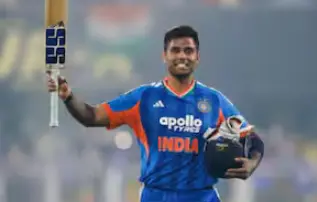
Clarifying India’s stance, Suryakumar said India will adhere to the official schedule and arrive in Colombo as planned for the India vs Pakistan T20 World Cup 2026 encounter.
He noted that fixtures were finalised by the ICC in consultation with the BCCI and government authorities, and India had never communicated any refusal to play Pakistan at the neutral Sri Lankan venue.
The T20 World Cup 2026 is being co-hosted by India and Sri Lanka, with Pakistan’s entire campaign shifted to Sri Lanka due to strained bilateral relations between New Delhi and Islamabad.
Earlier, Pakistan had supported Bangladesh’s push for a venue change over security concerns, and was left angered when Bangladesh was removed from the tournament after a prolonged logistical standoff with the ICC.
Officials and former players in Pakistan have pointed to what they describe as ICC “double standards”, arguing that India enjoys freedom of movement and hosting rights while other teams face stricter constraints.
Pakistan’s boycott of the India match has been framed domestically as a political stand and a show of solidarity with Bangladesh, further entangling cricket with regional geopolitics.
Despite the Pakistan boycott call, India’s preparations for the T20 World Cup 2026 remain unchanged, with team management determined to follow ICC protocol to the letter.
Sources indicate that if India walk out for the toss and Pakistan do not appear, the match referee will be compelled to award the game to India, handing Suryakumar’s side two free points in the group stage.
Suryakumar Yadav has recent experience dealing with boycott chatter and political overtones around India–Pakistan games, having previously urged his team to block out “outside noise” during the Asia Cup 2025 clash in Dubai.
The captain’s latest comments signal a continuation of that approach, with the Indian camp intent on focusing on performance and leaving political decisions to boards and governments.
Pakistan are in Group A alongside India, Namibia, the Netherlands and the USA, and are expected to play all their group matches in Sri Lanka, starting against the Netherlands in Colombo.
If Pakistan stick to their decision to skip only the India match, they will likely stay alive in the tournament but carry the handicap of an automatic loss and lost points against their biggest rivals.
The boycott has deprived fans of one of the most anticipated fixtures on the global cricket calendar, with India vs Pakistan World Cup matches traditionally drawing massive in-stadium and broadcast audiences worldwide.
While India appear ready to collect the points and move on, many stakeholders fear long-term damage to the spirit of competition if political boycotts become a recurring feature of ICC events.
Cricket experts and former cricketers have remained divided, with some backing Pakistan’s right to take a political stand and others warning that selective participation erodes the credibility of global tournaments.
The ICC itself has cautioned that “selective involvement undermines the integrity and spirit” of competitions, even as it awaits formal communication from the PCB on the final status of the India match.
With Pakistan accusing the ICC of favouring India and linking their boycott to broader grievances over hosting, security and scheduling, questions are being raised about whether future India–Pakistan World Cup meetings can be protected from political turbulence.
For now, Suryakumar Yadav’s pointed “we didn’t say no, they did” remark frames India as ready and willing participants, placing the onus firmly on Pakistan and the ICC ahead of the February 15 fixture.
1. What exactly did Suryakumar Yadav say about Pakistan’s boycott of the India match?
Suryakumar Yadav said that India had not refused to play Pakistan and that the decision to skip the T20 World Cup 2026 group match came from the “other side”.
He added that India will follow the official ICC fixtures and that the team’s flight is already booked for Colombo, underlining that India intend to play the match as scheduled.
2. Why is Pakistan boycotting the India vs Pakistan T20 World Cup 2026 match?
Pakistan’s government has decided that the team will not take the field against India in Colombo, even though it will play the rest of the tournament.
The move has been linked to political objections, accusations of ICC “double standards” and Pakistan’s support for Bangladesh after the latter’s exclusion from the event.
3. Will India get the points if Pakistan do not show up for the match?
Under ICC rules, if Pakistan fail to appear for the India vs Pakistan T20 World Cup group clash and India are ready to play, the match is expected to be awarded to India.
In that scenario, India would receive two points for a walkover while Pakistan would suffer an automatic defeat in Group A.
4. Where is the India vs Pakistan T20 World Cup 2026 match supposed to be played?
The India vs Pakistan group match is scheduled to be played at the R Premadasa Stadium in Colombo, Sri Lanka, which serves as a neutral venue due to political tensions between the two countries.
All of Pakistan’s World Cup fixtures are slated to take place in Sri Lanka, even though India are co-hosting the tournament on home soil.
5. How has the ICC responded to Pakistan’s boycott decision?
The ICC has indicated that selective participation and boycotts undermine the integrity and spirit of global competitions and has emphasised the importance of consistent involvement by all teams.
At the same time, the governing body is awaiting formal communication from the PCB while weighing the broader implications for scheduling, points and future tournaments.


Leave a Comment