

Tech Research Today
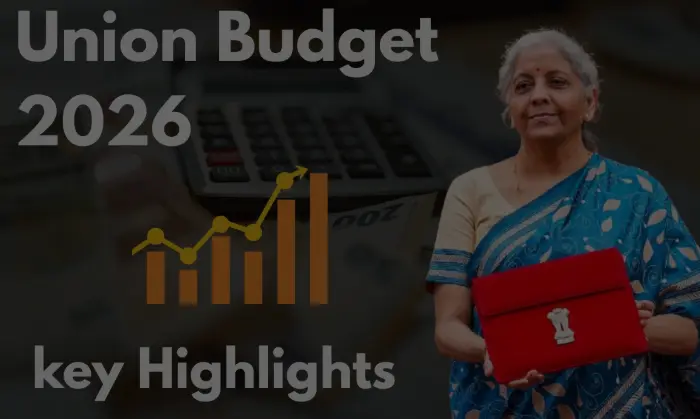
Finance Minister Nirmala Sitharaman on Sunday presented the Union Budget 2026–27, creating history by tabling the annual financial statement on a Sunday for the first time. Delivered at 11:00 AM in Parliament, the move underscores the government’s push for faster execution of policies and seamless commencement of the new fiscal year.
Presenting her ninth consecutive Union Budget, Sitharaman outlined India’s economic roadmap with a total expenditure of ₹53.5 lakh crore, guided by the vision of Viksit Bharat. The budget rests on three core priorities-accelerating economic growth, meeting citizens’ aspirations, and ensuring equitable access to resources—while maintaining fiscal prudence and macroeconomic stability.
Fiscal consolidation remains a cornerstone of Budget 2026–27. The government has set the fiscal deficit target at 4.3% of GDP, an improvement from 4.4% in the previous year. The Finance Minister highlighted that the commitment made in 2021–22 to bring the deficit below 4.5% has been successfully achieved.
The debt-to-GDP ratio is projected to decline to 55.6%, with a long-term goal of reaching 50% (±1%) by 2030–31. Total non-borrowing receipts are estimated at ₹34.96 lakh crore, while total expenditure is projected at ₹50.65 lakh crore. Gross market borrowings for FY27 are pegged at ₹17.2 lakh crore, balancing development needs with market stability.
To sustain infrastructure-led growth, the government has proposed ₹12.2 lakh crore in capital expenditure for FY 2026–27—about 9% higher than the revised estimates of the previous year. This represents nearly a six-fold increase since 2014–15, reflecting sustained focus on building long-term economic capacity.
Infrastructure Risk Guarantee Fund to mitigate construction-stage risks and attract private investment
City Economic Regions (CERs) with ₹5,000 crore per region over five years, focused on Tier-2 and Tier-3 cities
Seven new high-speed rail corridors connecting major urban centres
East–West Dedicated Freight Corridor from Dankuni to Surat
Operationalisation of 20 new National Waterways over five years
Coastal Cargo Promotion Scheme to double inland and coastal shipping share by 2047
Seaplane VGF Scheme to promote domestic manufacturing and operations
REITs for CPSEs to unlock value from surplus real estate assets
While income tax slabs remain unchanged, major structural reforms were announced.
Effective April 1, 2026, the new law simplifies India’s tax system by reducing content volume by nearly 50%. It introduces a single “tax year”, removing the distinction between assessment year and previous year. Notably, taxpayers can now claim TDS refunds even if returns are filed late, without penalties.
MAT reduced to 14% and made final, with no new credit accumulation
STT raised on futures and options
Buyback proceeds to be taxed as capital gains
TCS on overseas education, medical expenses, and tour packages reduced to 2%
TDS rationalisation for manpower services
Unified safe harbour margin of 15.5% for IT services
Defence received a historic ₹7.85 lakh crore allocation, a 15.3% increase over last year. Capital expenditure for modernisation rose sharply to ₹2.19 lakh crore, supporting aircraft, naval assets, and advanced defence technology.
To strengthen aerospace manufacturing, basic customs duty has been exempted on aircraft components and MRO-related raw materials used by defence units.
Healthcare allocation crossed ₹1.06 lakh crore, marking a 10% year-on-year increase and nearly 194% growth since 2014–15.
Biopharma SHAKTI: ₹10,000 crore over five years
10,000 new medical seats
Training of 1.5 lakh allied health professionals
Expansion of mental health infrastructure, including NIMHANS-2
Emergency and trauma care centres in district hospitals
Customs duty exemption on essential cancer drugs
Development of five Medical Value Tourism hubs
Creation of 1,000 clinical trial sites
Education received ₹1.39 lakh crore, up 8.27% year-on-year. Higher education saw the largest growth.
AVGC content labs in 15,000 schools and 500 colleges
Girls’ hostels in every district
Five university townships along industrial corridors
New National Institute of Design in eastern India
Centre of Excellence in AI for Education
Reduced TCS for students studying abroad
Combined allocations for agriculture and rural development exceed ₹4.35 lakh crore.
Agriculture budget raised to ₹1.32 lakh crore
Fertiliser subsidy above ₹1.70 lakh crore
Push for high-value crops like coconut, cashew, cocoa, sandalwood, horticulture, and agarwood
Launch of Bharat-VISTAAR, an AI-powered agri decision platform
Fisheries development across 500 reservoirs
Livestock and dairy entrepreneurship support
The new G-RAM-G scheme replaces MGNREGA, increasing guaranteed employment from 100 to 125 days, with an allocation of ₹95,692 crore. During the transition, MGNREGA continues with reduced funding. Combined rural employment spending crosses ₹1.25 lakh crore.
The budget introduces a ₹10,000 crore SME Growth Fund, alongside:
₹2,000 crore top-up for Self-Reliant India Fund
Revival of 200 legacy industrial clusters
Stronger credit guarantees and TReDS–GeM integration
Affordable compliance support through para-professionals
Revised MSME classification norms
A landmark announcement offers a tax holiday till 2047 for foreign data centre-led cloud services operating through Indian partners. This is expected to attract major global tech investments and boost skilled employment.
Other measures include:
India Semiconductor Mission 2.0
Expanded electronics manufacturing incentives
₹250 crore for the AVGC sector
Labour ministry schemes increased by 82%
Tourism, textiles, care economy, and creative sectors targeted for job creation
Gender Budget touches ₹5 lakh crore
Girls’ hostels, SHE Marts, Lakhpati Didi expansion, and caregiver training announced
Continued focus on green hydrogen, renewables, EV components, and nuclear energy
Union Budget 2026–27 signals a decisive shift toward long-term structural growth, prioritising infrastructure, technology, human capital, and fiscal stability over short-term populism. With sustained public investment, wide-ranging reforms, and strong emphasis on employment and inclusion, the budget aims to keep India firmly on a high-growth path toward Viksit Bharat 2047.
Q1. When was the Union Budget 2026–27 presented and by whom?
The Union Budget 2026–27 was presented on Sunday, February 1, 2026, at 11:00 AM by Finance Minister Nirmala Sitharaman. This marked her ninth consecutive budget and the first time the Union Budget was tabled on a Sunday.
Q2. What is the total size of the Union Budget 2026–27?
The total budget outlay for FY 2026–27 stands at ₹53.5 lakh crore, making it one of the largest budgets in India’s history.
Q3. What fiscal deficit target has been set for FY 2026–27?
The government has fixed the fiscal deficit at 4.3% of GDP, improving upon the revised estimate of 4.4% for FY 2025–26 and reinforcing its commitment to fiscal consolidation.
Q4. How much capital expenditure has been allocated for infrastructure?
A record ₹12.2 lakh crore has been allocated towards capital expenditure for infrastructure development, reflecting a 9% increase over the previous year.
Q5. Were there any changes in income tax slabs in Budget 2026?
No changes were announced in income tax slabs. However, major structural reforms were introduced, including implementation of the New Income Tax Act, 2025 from April 1, 2026.
This article is based on information available from the Union Budget 2026–27 speech, official government releases, and publicly accessible policy documents as of February 2026. While every effort has been made to ensure accuracy and clarity, budget proposals, allocations, and policy announcements are subject to parliamentary approval, subsequent notifications, and detailed guidelines issued by concerned ministries.
The information provided is intended solely for general awareness and informational purposes. It should not be interpreted as financial, legal, tax, or investment advice. Readers are advised to consult official government notifications, qualified professionals, or authorised agencies for specific interpretations, eligibility criteria, and implementation details. The publisher and author assume no responsibility or liability for decisions taken based on this information.


Leave a Comment